A week after surgery, I'm feeling pretty well and am cleared to start cardiac rehabilitation (rehab).
What the heck?
It's exercising at low intensities, while being carefully monitored, in a hospital setting, so they can make sure my new heart valve is behaving.
So I start about 10 weeks of walking on a treadmill and riding a recumbent bike while having my BP, heart rate, and O2 levels checked regularly, and while being hooked up to a heart monitor.
Because our insurance is Blue Cross/Blue Shield, I get to drive to Timpanogos Regional Hospital and attend rehab there.
We start really slow at 7 minutes of walking and 7 minutes of biking at really low speeds.
The goal is to build up to about 30 minutes of each, with gradually increasing speeds and intensities.
Penny, the RN assigned to rehab, is great to work with--thankfully. Otherwise, I'm not sure how dedicated I'd be to this whole routine. And her schedule is pretty flexible--anytime between 9 a.m. and about 3:30 p.m. works.
But, when am I supposed to be able to work? All of these follow up appointments are killing my available hours.
With about three weeks left, our insurance changes, so I have to switch to doing cardiac rehab at UVRMC in Provo. Yeah, that's not much fun. Plus, their protocols are so different.
At Timp, there were at most three other patients. Usually, it was just one other patient besides me, using the 2 treadmills and 2 recumbent bicycles.
At UVRMC, there are about 30 other patients in a huge room, with about 15 treadmills, 5 recumbent bikes, and some different equipment I've never seen before. Plus, they have very specific protocols about the two-hour time window they run rehab, wearing name tags, signing in, doing warm ups, waiting for someone to help you before moving to the next part of your routine.
It's a giant pain--not to mention the even longer drive. Now I have to pass American Fork Hospital and Timpanogos Regional Hospital before getting to UVRMC.
They tell me that their protocol is to get people to tolerate 60 minutes of activity. I'm already there and at a higher intensity than any other patients, so they're advancing to Phase 3 of rehab.
If they think I'm good enough, I decide I'm good enough too. I don't show up for my scheduled Phase 3 appointment, and no one calls to follow up, so I drop out and don't go back.
Purple Everywhere
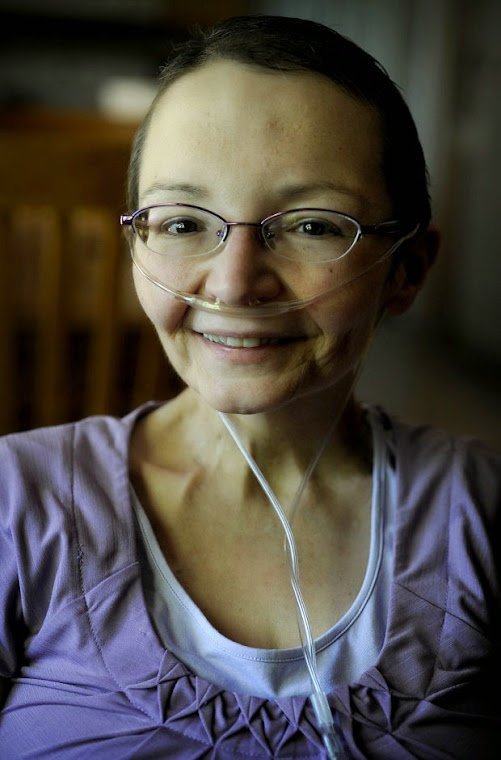
Daily Herald picture
Showing posts with label trans-apical aortic valve replacement. Show all posts
Showing posts with label trans-apical aortic valve replacement. Show all posts
Wednesday, June 26, 2013

Friday, June 21, 2013
Doctor With Strange Sense of Humor
The only remarkable thing about my three-day stay in the hospital while recovering from the TAVR was one of the attending doctors that was following me.
I think his name was Jonathen?
Anyway, the morning after surgery he came to check on me. I think he was trying to be funny, but he didn't introduce himself or what his role in my care was and started with, "Why are you still here? Haven't you left yet?"
Huh?
"I just had my aortic valve replaced."
"I know. But the guy we did before you has already been discharged."
"And he had his aortic valve replaced?"
"Yep. Same as you."
"Through his ribs?"
"No. Through his right groin."
"Well, that's different. If you're going to compare apples to apples. It's a complete different surgery, and one that's much easier to recover from."
All I got in response was a shrug. Weird!
Then he says, "Well, you're not still on pain medicines, are you? We need to get you off those."
Really? I can tolerate pain pretty well, but I'm in quite a bit of pain--from the chest tubes and especially when I cough.
In general though, I try to figure out people's expectations and then do everything I can to exceed them. I'm a pleaser by nature, so I immediately start trying to figure out how to at least reduce the amount of pain medication I'm taking.
The next day when he comes to check on me, I'm prepared.
I announce, "Hey, I'm down to taking pain medications only every six hours."
He doesn't let me finish before he cuts me off with "Trish, you just had your aortic valve replaced; and we had to go through your ribs. I don't want you even thinking about reducing your pain mediation yet."
What? Now I'm really confused. When I mentioned how strange and confusing his conversations were to Sally, she says that he just has a really odd manner and not to worry about it too much because I definitely can't change him.
It turns out that open heart surgery is actually easier and less painful to heal from because there are hardly any nerves around your sternum, yet your ribs are wrapped with lots of nerves. Interesting.
I think his name was Jonathen?
Anyway, the morning after surgery he came to check on me. I think he was trying to be funny, but he didn't introduce himself or what his role in my care was and started with, "Why are you still here? Haven't you left yet?"
Huh?
"I just had my aortic valve replaced."
"I know. But the guy we did before you has already been discharged."
"And he had his aortic valve replaced?"
"Yep. Same as you."
"Through his ribs?"
"No. Through his right groin."
"Well, that's different. If you're going to compare apples to apples. It's a complete different surgery, and one that's much easier to recover from."
All I got in response was a shrug. Weird!
Then he says, "Well, you're not still on pain medicines, are you? We need to get you off those."
Really? I can tolerate pain pretty well, but I'm in quite a bit of pain--from the chest tubes and especially when I cough.
In general though, I try to figure out people's expectations and then do everything I can to exceed them. I'm a pleaser by nature, so I immediately start trying to figure out how to at least reduce the amount of pain medication I'm taking.
The next day when he comes to check on me, I'm prepared.
I announce, "Hey, I'm down to taking pain medications only every six hours."
He doesn't let me finish before he cuts me off with "Trish, you just had your aortic valve replaced; and we had to go through your ribs. I don't want you even thinking about reducing your pain mediation yet."
What? Now I'm really confused. When I mentioned how strange and confusing his conversations were to Sally, she says that he just has a really odd manner and not to worry about it too much because I definitely can't change him.
It turns out that open heart surgery is actually easier and less painful to heal from because there are hardly any nerves around your sternum, yet your ribs are wrapped with lots of nerves. Interesting.
Wednesday, June 19, 2013
TAVR
After a heart catheterization by Dr. Tandar (to see how big the vessels are and the structures of the heart), it's determined that I'm not a good candidate for open heart surgery, nor for the TAVR through the right groin.
Of course not! Why would I want to be easy or normal.
I get the TAVR through the ribs, which is the most painful way to replace an aortic valve. It's the least desirable option because the U has done only 12 of them, I'm their 13th patient and because the ribs are wrapped with nerves and they have to irritate those nerves a lot by separating or spreading the ribs and inserting instruments in and out of them.
Lucky me!
I'm scared to death. They're going to go into my heart, push a foreign body (a manufactured valve) into it, and hope it keeps working? It's my heart. It's essential. There are lots of risks associated with this procedure. And even though this technique has been used in Europe for 5-6 years, it was just approved in the US in 2011.
Yikes!
Almost too late, I do receive some calm assurances that this surgery won't kill me. (That would be too easy.) And that it will go well. Finally, two days before the surgery on June 19, I can sleep again. Whew!
The surgery actually goes well. I refuse the Versed, so I'm awake and alert as they start the arterial IV line (so they can monitor everything) and get to ask some questions as they get set up. Eventually, I'm holding my own oxygen mask because it won't stay on and talking to the various personnel in the operating room.
I can tell the anesthesiologist is having trouble placing the arterial line, but what did he expect from someone who's had five different chemo regimens so far? All of that poison running around my blood vessels has got to do a lot fo damage. About 20 minutes after arriving in the room, he must have gotten it because, without any warning, I start feeling heavy and dizzy and doze off.
It can't be too much later though, that I realize I'm awake again, but I can't move anything: eyes, fingers, mouth--nothing.
But I'm hearing all of the conversations in the room, and most seem to be centered on my chest and how they're going to move my left breast and keep it away from the surgery site. My chest is mentioned at least 5-6 times, and I'm laughing to myself and almost feel guilty that I'm listening in on their dilemma without them being aware of it.
Finally, someone offers to run and try to find some heavy-duty tape. And at that point, I'm asleep again.
When I wake up, Dale's in the room and a nurse, but I'm greatly annoyed because my wrists are tied down somehow. I'm also still intubated and have that tube down my throat, but I was warned about that, so I'm not surprised or too annoyed at that.
When I'm finally conscious enough, they remove the restraints; and I ask for paper and a pen so I can at least communicate by writing. (Dale says my first notes were just scribbles, but I'm convinced they were really important.)
Not too much later the intubation tube comes out, and I can really assess the damage.
I have the following things attached to me:
1. Intubation tube
2. Pacing wire in my right groin
3. Arterial IV line
4. Swann's catheter
5. MAC line (central line in my neck)
6. 1 chest tube
7. Jackson Pratt drain
8. Triple lumen catheter in my left neck
9. Port accessed
10. BP cuff
11. O2 monitor
12. EKG leads
13. Squeezy things on both legs to prevent blood clots
Whew! No wonder I feel a little beat up. Actually though, considering, I feel pretty good, and I'm moved to a regular room within a few hours.
Dale says that they told him to expect up to a 4 hour surgery, but I was in there only about 90 minutes. They told him they'd give him updates every 30 minutes; but they didn't have time to call him and give him the third update before the doctors were in front of him, telling him it was over and went very well.
Hooray! Survived that obstacle.
Of course not! Why would I want to be easy or normal.
I get the TAVR through the ribs, which is the most painful way to replace an aortic valve. It's the least desirable option because the U has done only 12 of them, I'm their 13th patient and because the ribs are wrapped with nerves and they have to irritate those nerves a lot by separating or spreading the ribs and inserting instruments in and out of them.
Lucky me!
I'm scared to death. They're going to go into my heart, push a foreign body (a manufactured valve) into it, and hope it keeps working? It's my heart. It's essential. There are lots of risks associated with this procedure. And even though this technique has been used in Europe for 5-6 years, it was just approved in the US in 2011.
Yikes!
Almost too late, I do receive some calm assurances that this surgery won't kill me. (That would be too easy.) And that it will go well. Finally, two days before the surgery on June 19, I can sleep again. Whew!
The surgery actually goes well. I refuse the Versed, so I'm awake and alert as they start the arterial IV line (so they can monitor everything) and get to ask some questions as they get set up. Eventually, I'm holding my own oxygen mask because it won't stay on and talking to the various personnel in the operating room.
I can tell the anesthesiologist is having trouble placing the arterial line, but what did he expect from someone who's had five different chemo regimens so far? All of that poison running around my blood vessels has got to do a lot fo damage. About 20 minutes after arriving in the room, he must have gotten it because, without any warning, I start feeling heavy and dizzy and doze off.
It can't be too much later though, that I realize I'm awake again, but I can't move anything: eyes, fingers, mouth--nothing.
But I'm hearing all of the conversations in the room, and most seem to be centered on my chest and how they're going to move my left breast and keep it away from the surgery site. My chest is mentioned at least 5-6 times, and I'm laughing to myself and almost feel guilty that I'm listening in on their dilemma without them being aware of it.
Finally, someone offers to run and try to find some heavy-duty tape. And at that point, I'm asleep again.
When I wake up, Dale's in the room and a nurse, but I'm greatly annoyed because my wrists are tied down somehow. I'm also still intubated and have that tube down my throat, but I was warned about that, so I'm not surprised or too annoyed at that.
When I'm finally conscious enough, they remove the restraints; and I ask for paper and a pen so I can at least communicate by writing. (Dale says my first notes were just scribbles, but I'm convinced they were really important.)
Not too much later the intubation tube comes out, and I can really assess the damage.
I have the following things attached to me:
1. Intubation tube
2. Pacing wire in my right groin
3. Arterial IV line
4. Swann's catheter
5. MAC line (central line in my neck)
6. 1 chest tube
7. Jackson Pratt drain
8. Triple lumen catheter in my left neck
9. Port accessed
10. BP cuff
11. O2 monitor
12. EKG leads
13. Squeezy things on both legs to prevent blood clots
Whew! No wonder I feel a little beat up. Actually though, considering, I feel pretty good, and I'm moved to a regular room within a few hours.
Dale says that they told him to expect up to a 4 hour surgery, but I was in there only about 90 minutes. They told him they'd give him updates every 30 minutes; but they didn't have time to call him and give him the third update before the doctors were in front of him, telling him it was over and went very well.
Hooray! Survived that obstacle.
Monday, June 3, 2013
Initial Heart Appointments
It's off to the UofU hospital to talk to Dr. Tandar about an aortic valve transplant. I'm not that excited that we even have to discuss the subject, but here we go.
Monday
We meet with Dr. Tandar and Dr. Amit Patel. They're pushing for a trans-apical approach either through the right groin or through my ribs on the left side because it's less recovery time than open heart surgery. Also, as they put it, these other techniques were developed for high-risk patients that might not make it off the table from open-heart surgery. Oh joy! They think that's me--high-risk, might not survive open-heart surgery. And, because I just got radiation to the right groin area, they're thinking that they probably have to go through my ribs (less desirable, more painful, and more recovery time than through the groin).
It's funny, but I think the very best part of meeting Drs. Tandar and Patel are their assistant, Sally. She's awesome. She's their transplant coordinator and is available by email or cell phone to answer any of my questions. "You're my Rachael," I say delightedly.
She probably thinks I've misheard her name and says, "No, it's Sally."
When I explain to her that Rachael Beers is my bone marrow transplant and how efficient and effective she is, and how much I love working with her, Sally is a little relieved, but I don't think she still likes my comparison.
A bunch of tests have to be done before the doctors are willing to say which procedure they'd do (through the ribs or through the groin), so we talk about scheduling those. We tell them that we're seeking a second opinion at St. Mark's Hospital, so maybe half the tests should be scheduled at St. Mark's and half at the UofU.
Wherever we feel the most comfortable is where we'll have the procedure done.
Wednesday
We're supposed to meet with Dr. Kawande at St. Mark's Hospital. However, when we get there (and not before), we're told that Dr. Kawande can't meet with us unless we want to wait three weeks, so they scheduled us with Dr. Schorlemmer instead. But first, we need to meet with another cardiac doctor first. That first doctor was an absolute waste of our time. He basically told us, "You have a lot to think about and a lot of information to sort through so that you can make a decision on which way will work better for you. I don't know what to tell you and don't have any recommendations for you."
Monday
We meet with Dr. Tandar and Dr. Amit Patel. They're pushing for a trans-apical approach either through the right groin or through my ribs on the left side because it's less recovery time than open heart surgery. Also, as they put it, these other techniques were developed for high-risk patients that might not make it off the table from open-heart surgery. Oh joy! They think that's me--high-risk, might not survive open-heart surgery. And, because I just got radiation to the right groin area, they're thinking that they probably have to go through my ribs (less desirable, more painful, and more recovery time than through the groin).
It's funny, but I think the very best part of meeting Drs. Tandar and Patel are their assistant, Sally. She's awesome. She's their transplant coordinator and is available by email or cell phone to answer any of my questions. "You're my Rachael," I say delightedly.
She probably thinks I've misheard her name and says, "No, it's Sally."
When I explain to her that Rachael Beers is my bone marrow transplant and how efficient and effective she is, and how much I love working with her, Sally is a little relieved, but I don't think she still likes my comparison.
A bunch of tests have to be done before the doctors are willing to say which procedure they'd do (through the ribs or through the groin), so we talk about scheduling those. We tell them that we're seeking a second opinion at St. Mark's Hospital, so maybe half the tests should be scheduled at St. Mark's and half at the UofU.
Wherever we feel the most comfortable is where we'll have the procedure done.
Wednesday
We're supposed to meet with Dr. Kawande at St. Mark's Hospital. However, when we get there (and not before), we're told that Dr. Kawande can't meet with us unless we want to wait three weeks, so they scheduled us with Dr. Schorlemmer instead. But first, we need to meet with another cardiac doctor first. That first doctor was an absolute waste of our time. He basically told us, "You have a lot to think about and a lot of information to sort through so that you can make a decision on which way will work better for you. I don't know what to tell you and don't have any recommendations for you."
Well, if that's what he, as an expert on the subject, thinks, how are Dale and I
supposed to figure it out? Not helpful!
Dr. Schorlemmer was much more helpful
and said, "Why don't we proceed with these five tests, which you'll have
to have prior to surgery anyway. The data from those tests will tell us what is
and isn't possible, rather than us trying to guess, based on your
history."
Hooray! A plan and someone that makes sense. So I stuck around
and Dad left me at the hospital so that he and Travis could go ATVing together.
I'll have more appointments on Thursday also. But the appointments at St. Mark's are all setting up for the perfect storm. For more details, see the post with that title!
Subscribe to:
Posts (Atom)